
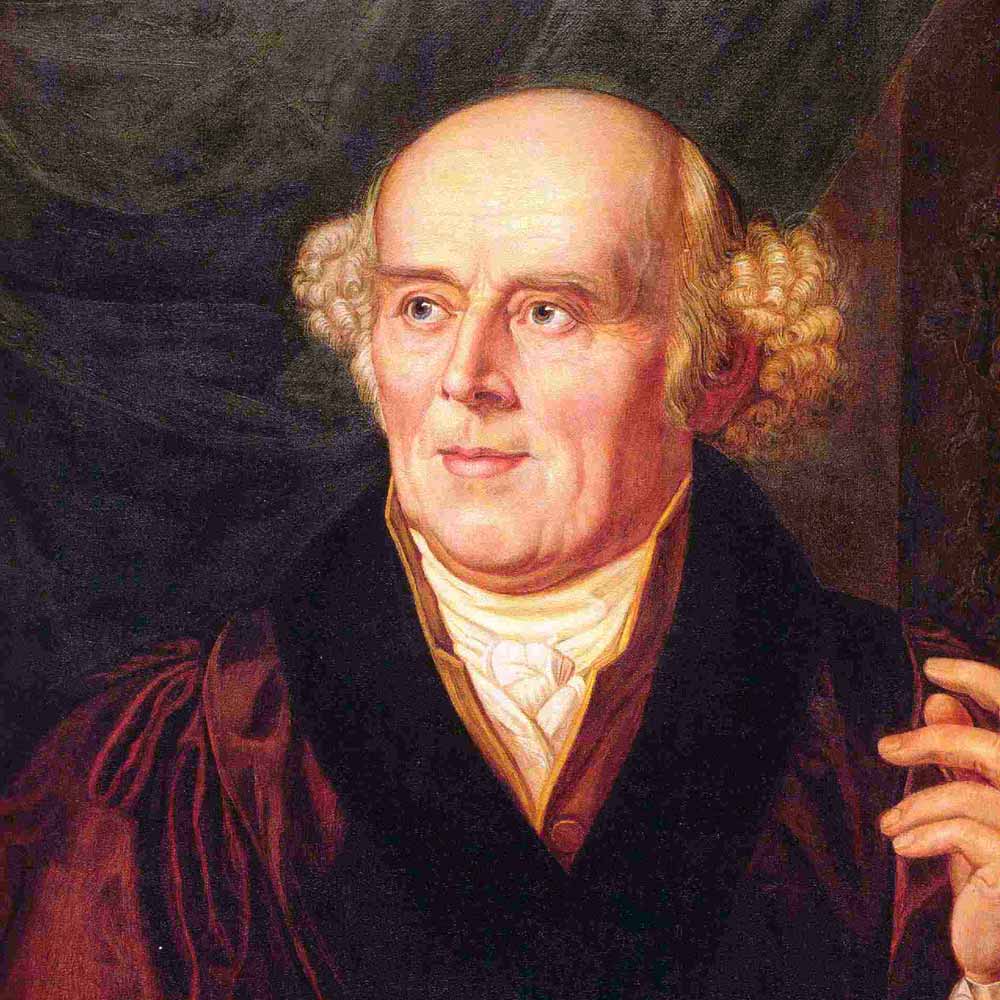
Samuel Hahnemann (1755–1843) was a German physician best known as the founder of homeopathy. Trained in conventional medicine, he became dissatisfied with the harsh and often ineffective medical practices of his time, such as bloodletting and the routine use of toxic substances. His strong background in chemistry, languages, and pharmacology led him to seek a more rational and humane approach to healing.
Through careful observation and self-experimentation, Hahnemann developed the principle that a substance capable of producing symptoms in a healthy person could, when prepared in a specific (highly diluted), way help relieve similar symptoms in a sick person. He emphasized individualized treatment, minimal dosing, and close attention to the patient’s physical and emotional state. His ideas were systematically presented in Organon of The Medical Art, a work that laid out the philosophical and practical foundations of homeopathy.
Hahnemann was widely respected by his supporters for his intellectual rigor, high ethical standards, and commitment to patient welfare. Although his ideas challenged mainstream medicine and were met with hostility by some of his peers, his influence was significant, leading to the establishment of homeopathic schools, hospitals, and pharmacopoeias worldwide. He is remembered as a reformer who sought to improve medical practice by grounding it in careful observation, consistency, and compassion.